Service
Pest Control
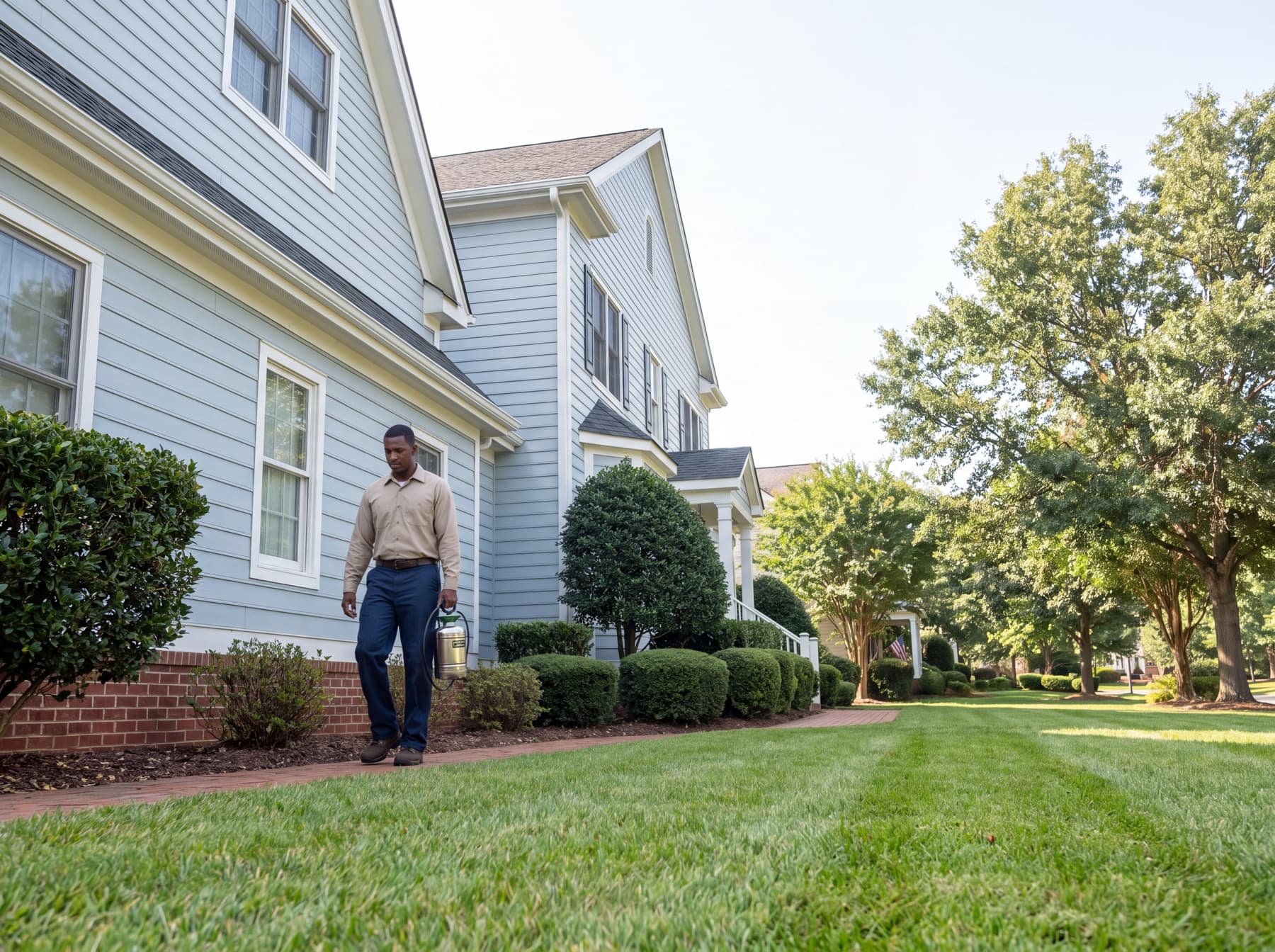
Comprehensive pest control for Triad homes — roaches, spiders, silverfish, and the seasonal pests that work their way into older homes and newer builds alike across Greensboro and the surrounding area. Every visit covers the interior and the exterior perimeter, backed by a recurring plan so pests stay out.
Greensboro sits in a part of the Piedmont where warm, humid stretches run long and winters rarely stay cold enough to fully knock pest populations back, so most Triad homes deal with some level of pressure nearly every month of the year. The two things nearly every homeowner wants to know before calling anyone: what a realistic budget looks like, and how to tell a technician who's actually going to solve the problem from one who's just going to spray and leave.
Signs You Actually Need Pest Control
A stray spider in the garage or a single ant on the counter isn't a reason to call anyone — that's just background noise in a place like the Triad. What separates a household with normal pest exposure from one that needs professional help is frequency and pattern: pests showing up inside on a regular basis rather than once in a while, droppings or nesting material turning up in the attic or crawlspace, wood near the foundation that's damaged or has mud tubes running across it, or a hardware-store spray that knocks the problem down for a few days before it's right back. That last one is a particularly useful signal — a consumer product that keeps failing in the exact same spot usually means there's an entry point or food source close by that a surface spray was never going to fix.
What Does Pest Control Cost in Greensboro?
A single one-time treatment typically runs $100 to $300, averaging close to $170, though a bad infestation can push that visit toward $600. Most homeowners end up on a recurring plan instead, and pricing splits out roughly like this:
- Monthly service — $40 to $70 per month, or about $480 to $840 annually.
- Quarterly service — $100 to $175 per visit, averaging near $44 a month, or roughly $400 to $600 for the year.
- Annual plans — $300 to $900 for the year, plus a separate $150 to $300 inspection fee charged on the first visit.
Key takeaway
Quarterly service is the right fit for most Triad homes without an active problem — monthly plans typically run 20 to 30% more per year than a routine, no-infestation household actually needs. Save monthly frequency for a period where an active issue is being actively brought under control, then step down once it is.
What's Included in a Standard Visit
A routine visit generally covers the interior living space, the exterior foundation line, and known entry points — window and door thresholds, utility penetrations, vents — along with a pass around the yard perimeter for ground-dwelling pests like ants. What often gets left out of the base price is crawlspace access: a lot of Greensboro's older housing stock, especially closer to neighborhoods like Fisher Park and Irving Park, was built with a crawlspace rather than a slab, and treating that space properly takes real time. Ask upfront whether crawlspace work is part of the standard visit or billed as an add-on — it's one of the bigger swing factors in what a Triad quote ends up costing.
Is It Actually Worth Paying for This?
Run the numbers and it holds up for most homeowners. A quarterly plan costs less per month than a couple of restaurant meals, and what it buys is a technician catching a small problem — a few carpenter ants near a bathroom, an early mud tube along the foundation — before it becomes a termite job running into thousands of dollars. There's also a compounding benefit that's easy to overlook: a company that's serviced your specific house for a couple of years already knows where the trouble spots are, which is worth more than a one-off visit from someone seeing the property for the first time.
Picking a Company You Can Trust
A few checks separate a solid company from one you'll regret hiring:
- Confirm the technicians carry a valid North Carolina pesticide license and that the company is bonded, so you're covered if something goes sideways during service.
- Ask specifically about their track record with your problem — a company that's great at termite work isn't automatically the right call for a yellowjacket nest under the eaves.
- Read reviews that mention specifics — response time, whether the issue actually got fixed, how a callback was handled — rather than just tallying star ratings.
- Insist on an actual walkthrough of the property, inside and out, before accepting a price. A number quoted without anyone setting foot on your property is a red flag, not a shortcut.
- Get the treatment plan in writing before anything starts: target pests, products being used, and any precautions around kids or pets.
- For anything beyond routine service — a termite job or a full rodent exclusion — collect two or three bids and compare what's actually included, since a warranty or follow-up visits can make a slightly higher bid the better deal.
Watch for pressure to sign the same day, a request to pay the full amount before work begins, or a tech who can't explain in plain terms what's being applied in your home. None of those are how a company confident in its own work behaves.
When Pests Are Most Active Around the Triad
Timing shifts through the year. Spring into early summer is when ant colonies and wasps ramp up fastest as they expand out of winter dormancy. By late summer and into fall, the pattern flips toward spiders and the pests looking for a warm place to spend the winter — stink bugs and lady beetles being the two homeowners notice most. A quarterly schedule is built around that rhythm rather than four evenly spaced visits, which is part of why a calendar reminder to spray something yourself isn't really a substitute for a plan a technician adjusts to the season.
Frequently Asked Questions
What's the difference between pest control and a pest inspection? Pest control is active treatment — a technician applies product to address current or ongoing activity. A pest inspection is a diagnostic walkthrough that documents what's found (or not found) without treating anything. Homeowners sometimes assume a routine pest visit includes a full inspection-level report, but the two are typically priced and scoped separately.
Do I need to leave the house during treatment? Usually not for a standard exterior and interior perimeter visit — most products used in routine pest control are applied in a way that lets you stay home, though it's common to be asked to keep kids and pets off freshly treated surfaces until they dry. Larger jobs like fumigation are the exception and do require leaving for a set period.
Is pest control safe for pets and children? Products used by licensed applicators are selected and applied specifically to be safe for a household once dry, and a reputable technician will walk you through any short waiting period before pets or kids should be back in a treated area. If a company can't clearly explain what's being used and why it's safe, that's worth pushing on before agreeing to service.
What happens if pests come back between scheduled visits? Most quarterly and monthly plans include free callback visits if something returns before the next scheduled service — that's typically built into the plan price rather than charged separately. Ask about this specifically before signing, since callback policies vary company to company.
Where We Offer Pest Control
What Homeowners Look For
A few things customers consistently tell us matter most.
Frequently Asked Questions
Ready to get this fixed?
Call now or request a free estimate — we'll get back to you fast.