Service
Ant Control
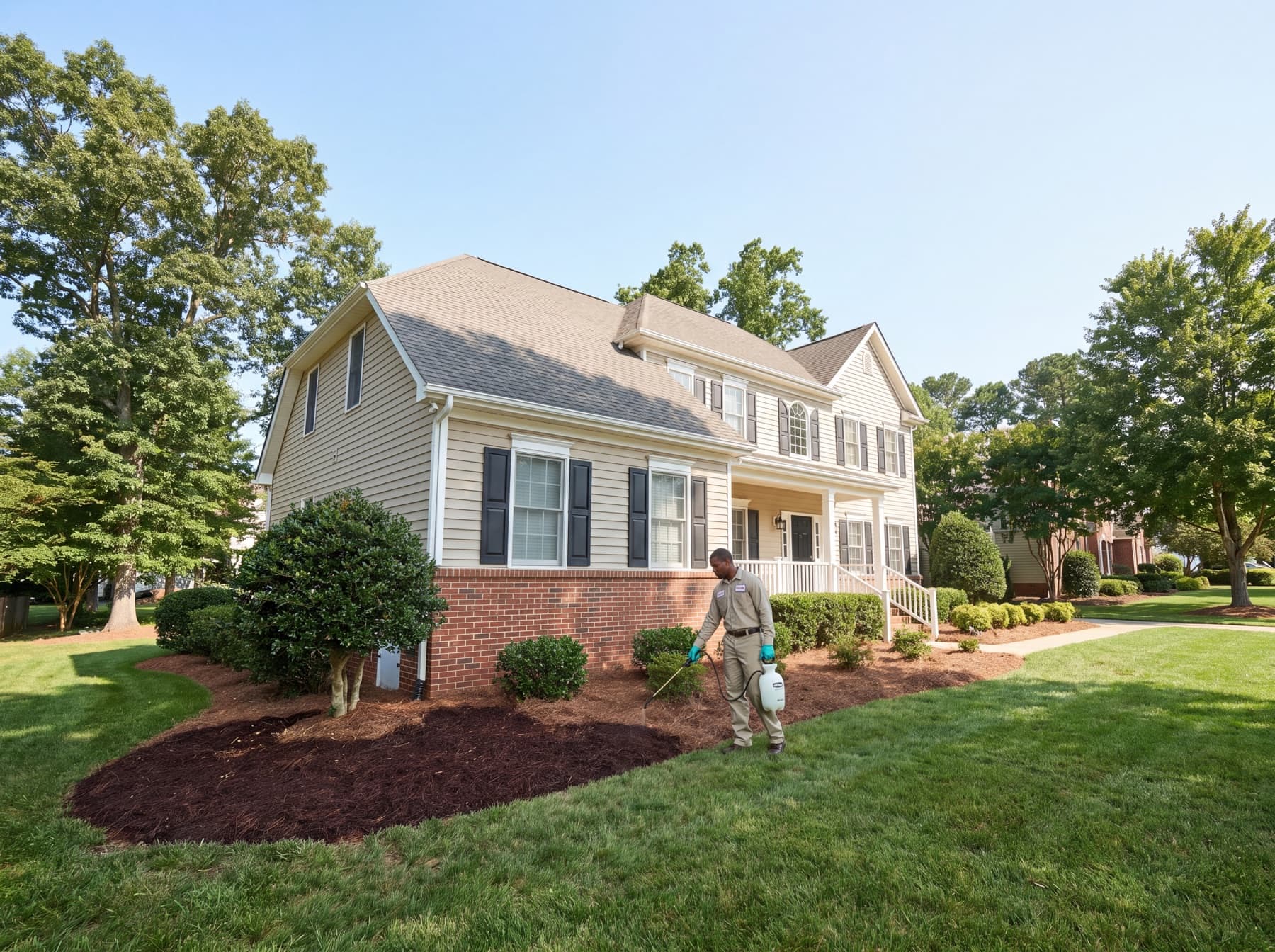
Ant control for the species that show up most in Triad yards and homes — odorous house ants, carpenter ants, and fire ant mounds — treated at the colony level instead of a surface spray that only scatters the trail temporarily.
Ask any pest control company in the Triad which complaint calls in the most, and ants win by a wide margin. It's rarely a single ant that triggers the call — it's a steady line crossing the kitchen counter, day after day, that finally convinces someone a can of spray from the hardware store isn't going to cut it. The spray usually does knock the visible ants down, and that's exactly the trap: a fix that works for three days is enough to keep people buying more spray instead of dealing with what's actually causing the trail.
Getting Rid of Ants: DIY vs. a Professional Approach
Boric acid baits, diatomaceous earth, and home remedies like peppermint or tea tree oil can all clear out the ants you can see on a countertop or windowsill. What none of them touch is the part of the problem that actually matters — the nest, and the queen inside it, which is almost never somewhere a spray reaches. It could be tucked into a wall void, sitting under a slab, or built into the yard itself. Repellent sprays can even work against you with certain species: disturbing an active trail sometimes triggers the colony to split into several smaller nests scattered across the property instead of staying put as one target you could eventually treat.
Key takeaway
If a spray clears a trail for a few days and the ants come right back to the same spot, the spray never reached the nest — it only interrupted the trail leading to it. That pattern is the clearest sign it's time to call a professional instead of buying a stronger can.
A professional treatment starts before any product goes down, with correctly identifying the species involved. A carpenter ant sighting near a bathroom or kitchen gets handled very differently than odorous house ants trailing in from a mulch bed against the foundation, since one of those can point to a wood-moisture issue and the other usually doesn't. Once the species is confirmed, treatment generally layers together:
- Non-repellent insecticides applied along active trails and entry points. Ants have no way to detect these products, so they walk straight through, carry it back to the colony, and spread it to nestmates that never left the nest.
- Targeted baiting set exactly where ants are feeding, working on the same delayed-transfer principle so the effect moves through the whole colony rather than killing only what's on contact.
- Perimeter treatment around the foundation line, which cuts off new trails from forming before they ever make it past the exterior wall.
Homeowners typically notice a real drop in activity within a few days. Full elimination usually takes one to two weeks, since the treatment has to work its way through the colony rather than kill everything at once — slower than an instant-kill spray, but the difference between ants gone for good and ants gone for a week.
Why Ants Are Getting Into Your Home
Three things pull ants indoors: food, water, and an opening to use. On the food side, sugary spills, syrup, pet food left out overnight, and even a thin layer of cooking grease on a stovetop are enough to start a trail. Ants recruit with pheromones, so a single scout that finds something worth eating can turn into a steady column of workers within hours. Water draws them in just as hard, sometimes harder — a slow drip under a sink, condensation collecting on a pipe, or a pet's water bowl left out can pull ants inside even in a kitchen that's otherwise spotless.
Entry points connect the two. Whether it's a settled older home near Fisher Park or Irving Park or a newer build out toward Kernersville or Mebane, the same small gaps show up everywhere: window and door frames, utility line penetrations, foundation vents, and hairline gaps along baseboard trim. None of these need to be large — most ant species can work their way through an opening about the size of a dime.
A few species show up differently and are worth telling apart:
- Odorous house ants — small, dark, and by far the most common ant complaint across Greensboro and the wider Triad — are drawn strongly to anything sweet and tend to trail indoors right after a hard rain, when their outdoor nests flood out.
- Carpenter ants are larger and don't eat wood the way termites do — they hollow it out to nest in instead. Spotting them near a bathroom, kitchen, or any area with a history of moisture is worth treating as a signal to check for a wood-moisture problem alongside the ant issue itself.
- Fire ants are mostly an outdoor concern in this area, building visible mounds in open lawn space around neighborhoods like Adams Farm and Sunset Hills, and they call for a different approach entirely from an indoor trailing species.
Keeping Ants Out Between Visits
A handful of habits meaningfully stretch the time between treatments:
- Wipe counters and sweep floors after cooking, especially near the stove, since even a small amount of leftover grease or sugar residue is enough to start a new trail overnight.
- Store pantry staples in sealed containers rather than the bags and boxes they came in. Sugar, cereal, pet food, and flour are common indoor targets once a trail gets established.
- Fix small leaks quickly. A dripping faucet or a sweating pipe is often a bigger draw than any food source, particularly during dry summer stretches when outdoor water sources dry up and ants push indoors specifically looking for moisture.
- Pull mulch and vegetation back from the foundation. Mulch beds pressed right against the house — common in a lot of Triad landscaping, from Downtown lots to newer subdivisions near Thomasville — give outdoor colonies a staging area just inches from an entry point.
- Seal gaps you've already seen ants use — window frames, utility penetrations, foundation vents. This won't stop every ant on its own, but it removes the easiest, already-proven paths inside.
None of this replaces treatment once a colony is established — a cleaner kitchen doesn't erase a pheromone trail that's already there — but it does make any treatment last longer and keeps new trails from forming as quickly.
Frequently Asked Questions
How much does ant treatment cost? Ant treatment is usually folded into a standard quarterly pest control visit rather than priced as its own service, since keeping ants out is often the exact reason people sign up for a recurring plan in the first place. Carpenter ants are the exception — locating the nest and checking for an underlying moisture problem takes more diagnostic time than a routine odorous house ant trail, so that work typically costs more than a standard visit.
How do you get rid of carpenter ants specifically? The priority is finding the actual nest location, since carpenter ants live inside wood rather than trailing back to an outdoor food source the way most ants do. A thorough treatment also checks nearby areas for a moisture problem, since carpenter ants are drawn to wood that's already been softened by water damage.
Why do ants show up in the house during winter? Cold weather pushes colonies to look for stable warmth and a steady indoor food source. Winter ant activity often means a colony has already established a nest somewhere inside the structure, rather than just visiting from outside — which is a more involved problem to treat than a seasonal outdoor trail.
What's the best way to deal with "sugar ants" in the kitchen? "Sugar ants" is just a common name for odorous house ants, and a non-repellent bait works better here than a contact-kill spray every time. Spraying scatters the colony and makes the trail harder to track, while bait gets carried back to wherever the colony is actually living.
Where We Offer Ant Control
What Homeowners Look For
A few things customers consistently tell us matter most.
Frequently Asked Questions
Ready to get this fixed?
Call now or request a free estimate — we'll get back to you fast.